

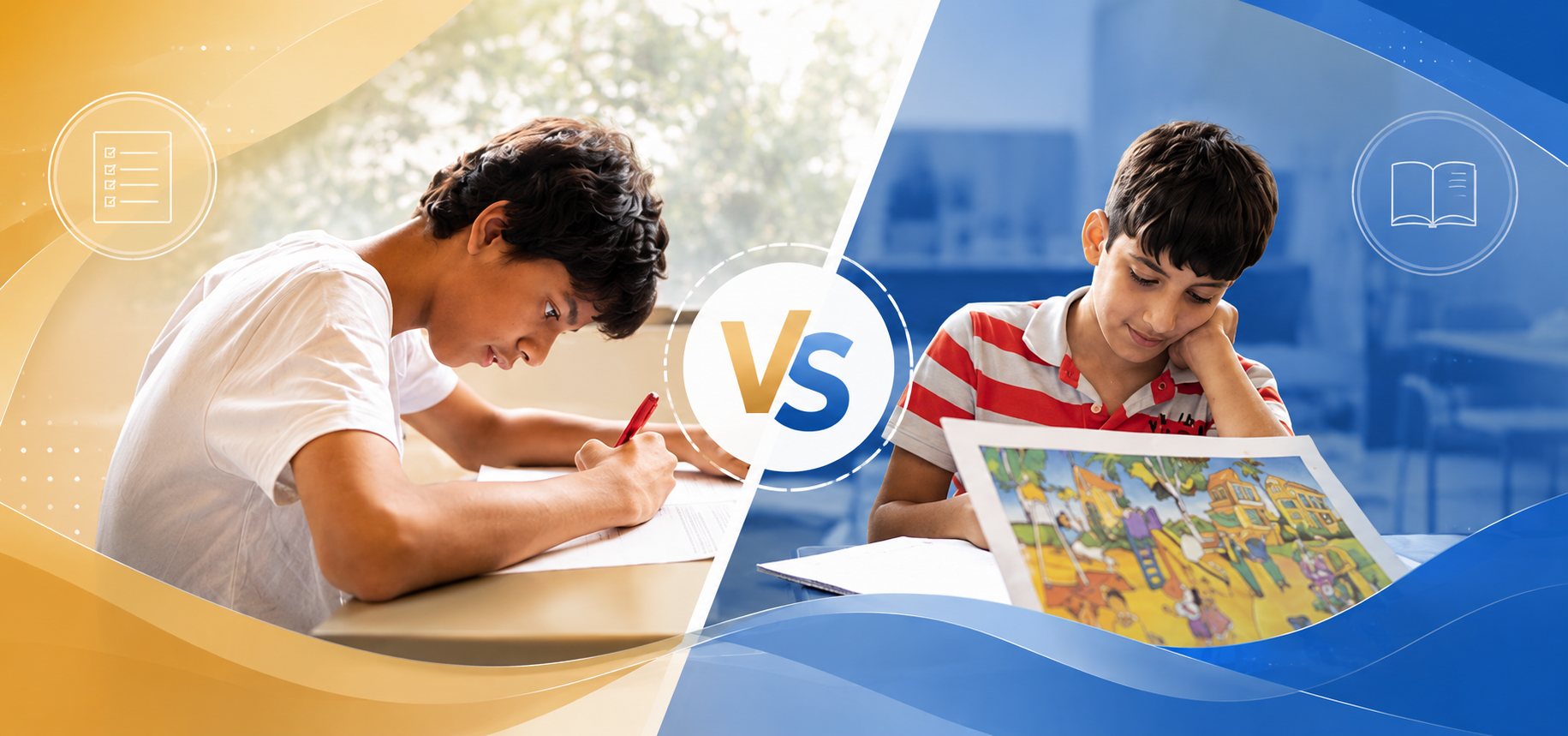
Choosing a curriculum is one of the first big decisions a parent makes for their child, and it rarely feels simple. Two names come up more than any others in India today: CBSE, the familiar and widely adopted board, and the IB, an internationally recognised framework offered by a smaller, growing number of IB schools. Both can prepare a child well. But they prepare children differently, and understanding that difference matters more than most parents realise at the outset.
This post is not about declaring a winner. It is about helping you understand what each curriculum actually asks of a child, so you can choose with clarity rather than assumption.
How CBSE Approaches Learning
CBSE is structured, syllabus driven, and built around a fairly standardised national framework. It works well for families who want a predictable academic pathway, particularly if a child may need to move between cities or schools within India. Assessment is largely exam based, with a strong emphasis on covering a defined curriculum thoroughly and performing well within it.
For many students, this structure offers comfort. There is a clear syllabus, a known exam pattern, and a well trodden path toward competitive entrance exams that are themselves aligned to this style of preparation.
How the IB Approaches Learning
The IB takes a different starting point entirely. Rather than asking “has the syllabus been covered,” it asks “has the student learned how to think.” The IB School Syllabus is inquiry led, which means students are expected to question, research independently, and connect ideas across subjects rather than absorb them in isolation.
Assessment in the IB is broader too. It includes coursework, projects, presentations, and reflective components alongside exams, so a child’s progress is not reduced to a single test score. By the time a student reaches the IB Diploma Programme, they are managing an Extended Essay, Theory of Knowledge, and a CAS portfolio alongside six subject groups, which builds a kind of intellectual independence that is difficult to replicate in a purely exam driven system.
Which One Actually Suits Your Child
This is where the decision becomes personal rather than theoretical. A child who is naturally curious, enjoys open ended problems, and is comfortable expressing their own point of view often flourishes in the IB environment. A child who prefers clear structure, defined targets, and a more traditional classroom rhythm may find CBSE a more comfortable starting point.
Neither preference is better than the other. What matters is being honest about how your child learns best, rather than choosing a board because it is familiar or because it looks impressive on paper.
If you are weighing this decision at the very start of your child’s schooling, it is worth beginning early. Families exploring the IB from the nursery stage can review the school admission process for nursery to understand how this foundational stage sets the tone for everything that follows.
At HIXS, one of the few institutions offering the complete IB continuum among schools with ib curriculum in the region, the programme structure is designed to support this kind of thinking from the earliest years right through to the Diploma. Families considering the switch, or weighing their options before their child even starts school, are welcome to visit and see the approach in practice.
A Note on University Outcomes
Both boards lead to strong university outcomes when a child is genuinely engaged with their coursework. The IB’s global recognition does give students an edge when applying abroad, since universities in the US, UK, Canada, and Europe are familiar with its rigour and format. CBSE students applying abroad can succeed too, but often need additional context or bridging exams depending on the destination.
For families who know international study is likely, or simply want to keep that door open without narrowing it early, the IB tends to offer more flexibility down the line.
Frequently Asked Questions
Q1. Is the IB harder than CBSE? The IB is demanding in a different way. It asks for sustained, independent effort across coursework and projects rather than concentrated exam preparation, which some students find more manageable and others find more challenging.
Q2. Can a child switch from CBSE to IB later? Yes, though the transition is easier at some grade levels than others. Structured support during the switch makes a meaningful difference, which is why transition support systems exist at IB institutions like HIXS.
Q3. Does CBSE limit university options abroad? Not entirely, but it can require additional steps depending on the country and university. The IB is more directly recognised by international admissions teams.
Q4. Which board is better for a child who is unsure of their interests? The IB’s broad subject requirements at the Diploma level tend to suit students who have not yet narrowed their interests, since it keeps multiple academic doors open simultaneously.
Q5. How do I decide without putting my child through unnecessary change? Speak to schools directly, visit classrooms if possible, and pay attention to how your child responds to open ended questions versus structured ones. That instinct is often more reliable than any ranking or comparison chart.


